
Infectious Disease Early Warning Device for Public Health
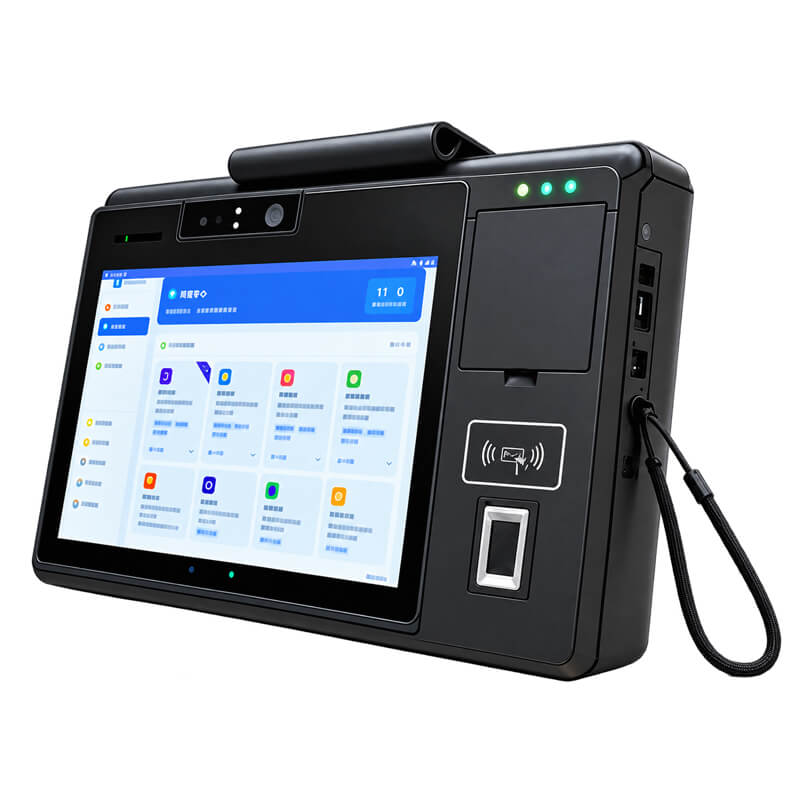
The Infectious Disease Early Warning & Analysis All-in-One Device is a professional intelligent terminal built for the public health sector. It deeply integrates high-performance ARM tablet hardware with self-developed infectious disease early warning and forecasting software. The system embeds 14 AI time-series forecasting models and 4 infectious disease compartmental dynamic models, supporting real-time monitoring of 11 respiratory pathogens and five-tier risk grading alerts.
It adopts a standalone local deployment architecture. All AI inference and data processing run locally on the device, with no additional server or cloud resources required.
Features
Fully Offline Operation
All AI inference and data processing are performed locally on the device. Sensitive data never leaves the hardware, securing public health data privacy and compliance.
Ready-to-Use Out of the Box
Automatic forecasting and analysis start right after deployment, with no complex configuration required.
Automated Multi-Model Ensemble Selection
The system automatically selects and optimizes models from its model library, delivering superior forecasting accuracy compared to single-model solutions.
Full-Loop Decision Workflow
It consolidates core capabilities including live early warning, intelligent forecasting, sand table simulation, historical record management, and report export. It forms a complete closed loop covering monitoring, alerting, simulation and decision-making.
Functions
Online Early Warning
The online early warning module serves as the core monitoring dashboard. It retrieves real-time respiratory pathogen surveillance data and supports one-click switching for monitoring of 11 pathogens: influenza, COVID-19, RSV, adenovirus, human metapneumovirus, parainfluenza virus, common coronavirus, bocavirus, rhinovirus, enterovirus and Mycoplasma pneumoniae.
Based on the WHO ACM threshold algorithm, the platform categorizes pathogen activity into five risk levels: Very Low (Green), Low (Blue), Moderate (Yellow), High (Orange), and Very High (Red), visualized via intuitive risk indicator lights. It automatically identifies trend directions and percentage changes, predicts infection peak timing and magnitude, and displays full time-series data in combined line charts overlaying historical and forecasted values.
When connected to the internet, the system automatically updates surveillance data weekly. In offline mode, cached data is displayed with clear timestamp labels.
Intelligent Forecasting
The intelligent forecasting module is the core entry for predictive modelling. Available forecasting functions are displayed in disease-specific cards. After users select a disease, they enter the forecasting workflow page and upload local surveillance datasets. Built-in smart column parsing automatically identifies date columns and value columns.
Users may select a forecast horizon of 1 week, 2 weeks or 4 weeks. The system runs multiple AI models in parallel, performs automatic ensemble selection and outputs optimized forecast results, alongside confidence intervals to quantify forecast uncertainty. Forecast outputs are automatically saved to historical records and exportable as PDF reports or CSV raw data files.
Sand Table Simulation
The sand table simulation module models infectious disease transmission dynamics within populations using compartmental models. It supports SEIR, SEIAR, SEIRD and SVEIR compartmental frameworks, with preloaded disease parameters for COVID-19, seasonal influenza, SARS and norovirus.
Users can adjust core epidemiological parameters including basic reproduction number R₀, infectious period, incubation period, population size and initial case count. Five intervention measures are configurable: mask wearing, social distancing, vaccination, isolation and lockdown, with customizable start time, end time and intervention intensity.
The system supports side-by-side comparison of multiple scenarios and parameter sensitivity analysis. Outputs include compartment population time curves and key epidemiological metrics.
Historical Record Management
The historical record management module displays all archived forecast records in reverse chronological order, with keyword search and multi-dimensional filtering. Users can view full forecast details, export outputs as formal PDF forecast reports or raw CSV datasets. Batch deletion and bulk clear operations are available.
This device is designed for centers for disease control and prevention at all administrative levels, primary healthcare institutions, and emergency command personnel.